
Who was Guthrum?
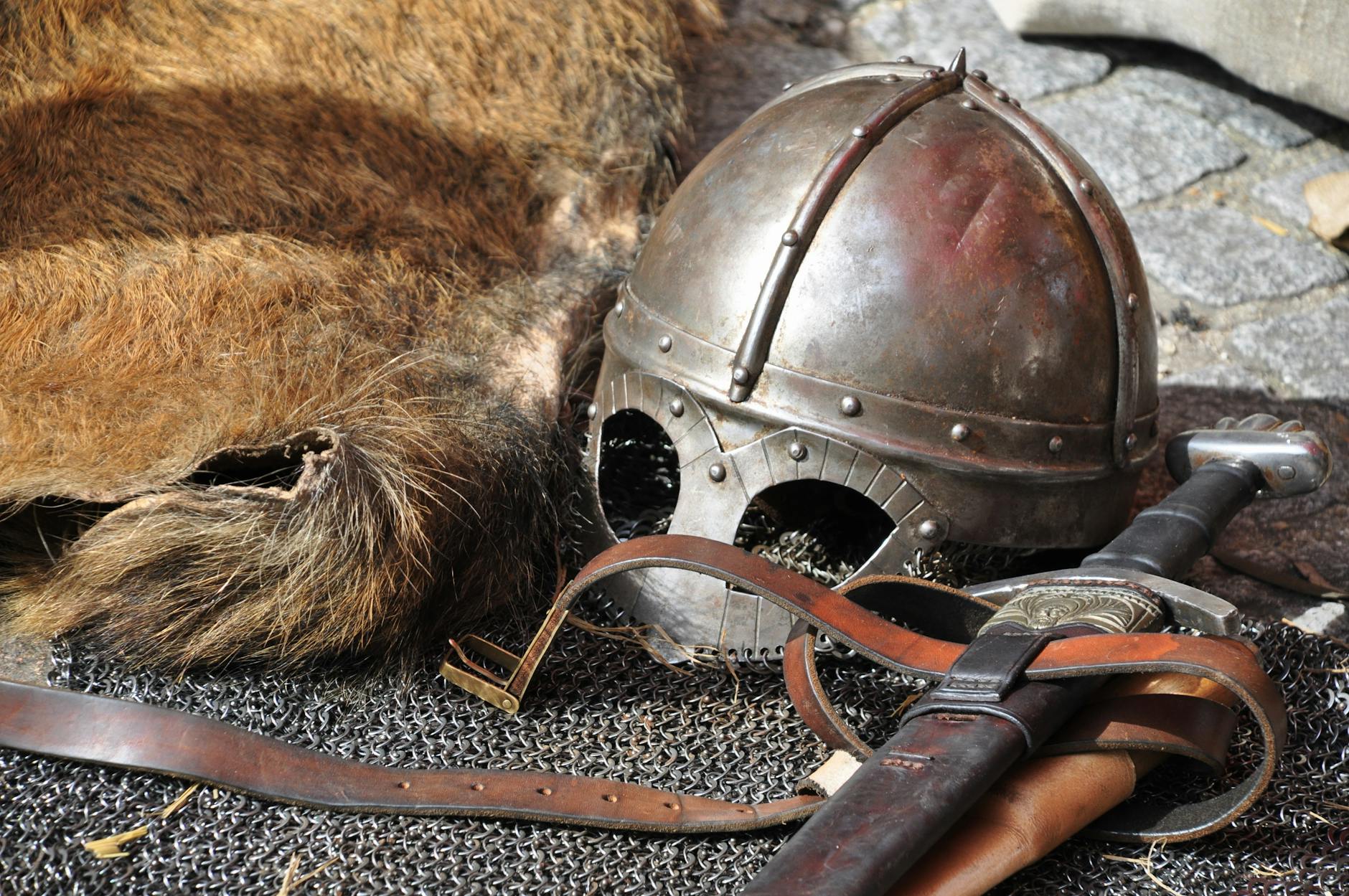
Guthrum (Old English: Guðrum), c. 835–890, was King of East Anglia in the late 9th century.
A Viking, originally from Denmark, he was one of the leaders of the Great Summer Army of 871, aiming to conquer the kingdoms of Anglo-Saxon England.
Guthrum campaigned against Alfred, King of Wessex, but was eventually defeated at the battle of Edington in 878. However, Alfred’s victory was not decisive and the two kings reached a truce. Under the resulting treaty, Guthrum retained his kingdom of East Anglia, was baptised, and took the name Aethelstan. Borders and trading rules between the two kingdoms were agreed, and the treaty held. Guthrum ruled his kingdom as a Christian king for his Christian subjects, and as a Pagan for his Pagan ones. He was the first Viking king in Britain to issue his own coinage. He died in 890, and is thought to be buried in Hadleigh, Suffolk.
 King Guthrum Group